Past Paper – Edexcel GCSE Physics – May 2024 Paper 1 – Detailed Answers
Q1 (c) (ii)
According to Doppler effect, red-shift suggests that the distant galaxies are moving away from us. Galaxies that are further away from us show a bigger red-shift. This means they are moving away faster, suggesting that the universe is expanding.
Q3 (c)
Since Force = Change in momentum/Time taken, another factor that affects the size of the force on the car is the change in momentum of the car. The higher the change in momentum of the car the greater the force on the car.
Q4(b)(i)
From the tumour, when an isotope emits a positron, the positron would meet an electron very close to the location from which it is emitted. When they meet, the positron and electron annihilate each other, emitting two gamma rays in opposite directions. These gamma rays are detected by two opposite detectors. The time difference between these detections is used to determine the location of the tumour.
Q4(b)(ii)
Typical half-life for radioactive tracers is about 6 hours. If the isotope is produced at a far away location and brought into the hospital, by the time it is injected into the patient, its activity would have already reduced to a very low level, making it difficult to make observations.
Q5(b)
Some of the electrons in the lower energy levels in the atoms absorb the energy of UV rays. As a result these electrons move to higher energy levels. These electrons then fall back to different low energy levels, emitting their energy as visible light.
Q9(c)
Momentum = mass × velocity.
Momentum is a vector quantity. If we consider the direction of motion of trolley P as positive and the mass of each trolley as m, the total momentum before the collision is mv + m(-v) = 0. As the trolleys stop after the collision, their total momentum after the collision is also zero. This shows that the total momentum before the collision is equal to the total momentum after the collision. Therefore, momentum is conserved.
Kinetic energy =  .
The total kinetic energy before the collision is  . The total kinetic energy after the collision is zero. During the collision, the kinetic energy of the trolleys is transferred to the surroundings as thermal energy. The total thermal energy transferred is equal to the total kinetic energy before the collision. Therefore, energy is also conserved.
Q10(d)
Ultrasound pulses are used to determine the depth of the ocean. Ultrasound has a frequency above 20 kHz. A device on the boat produces and emits ultrasound pulses which travel through the seawater towards the ocean bed. The pulses are reflected by the ocean bed and travel back to the boat as echoes.
The device on the boat measures the time between the emission of the ultrasound pulse and the receipt of the reflected pulse. The speed of sound in seawater is known.
Using the equation:
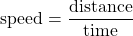
The distance travelled by the ultrasound pulse is calculated using:

As the ultrasound pulse travels from the boat to the ocean bed and back to the boat, the distance travelled is twice the depth of the ocean. Therefore, the depth is calculated by halving the distance travelled by the ultrasound pulse.